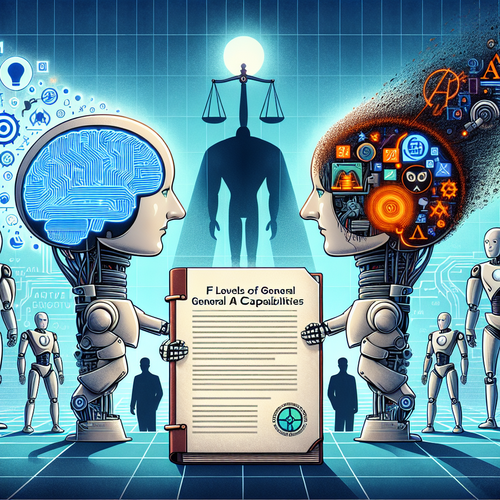
人工智能领域的发展日新月异,而在这场科技浪潮的中心,OpenAI与微软的深度合作无疑是焦点之一。然而,最近有报道指出,OpenAI一份尚未公开发表的内部研究论文,却可能给这份价值高达130亿美元的伙伴关系带来意想不到的复杂性。这篇名为“通用人工智能能力的五个层级”的论文,其内容关于如何界定和分类不同阶段的AI能力,似乎触及了合作协议中的敏感地带。
The field of artificial intelligence is evolving rapidly, and at the heart of this technological wave, the deep collaboration between OpenAI and Microsoft is undoubtedly a key focus. However, recent reports indicate that an internal research paper from OpenAI, which has not yet been publicly released, could introduce unexpected complexity to this partnership valued at up to $13 billion. This paper, titled “Five Levels of General AI Capabilities,” discusses how to define and classify different stages of AI capabilities, seemingly touching upon sensitive areas within the collaboration agreement.
问题的症结在于,OpenAI与微软的合作条款很大程度上依赖于对“通用人工智能”(AGI)的定义。根据内部消息源透露,如果OpenAI正式宣布其技术达到了该论文中定义的某个特定“通用”层级,那么合作协议中的相关条款可能会被触发。这可能意味着微软未来对OpenAI某些前沿技术的访问权限将受到限制,甚至可能迫使双方就合作条款进行重新谈判,极端情况下甚至面临合作终止的风险。
The crux of the issue lies in the fact that the terms of the partnership between OpenAI and Microsoft are largely dependent on the definition of “Artificial General Intelligence” (AGI). According to internal sources, if OpenAI formally declares that its technology has reached a certain specific “general” level as defined in this paper, then relevant clauses in the collaboration agreement could be triggered. This could mean that Microsoft’s future access to some of OpenAI’s cutting-edge technologies would be limited, or even force both parties to renegotiate the terms of the partnership, potentially risking termination in extreme cases.
这种紧张关系凸显了在快速发展的AI领域中,即使是顶级玩家之间,对于核心概念如AGI的理解和界定也存在差异。OpenAI试图通过内部框架来系统性地划分AI能力等级,而微软则可能有自己评判AGI的标准和商业考量。这份论文的存在及其潜在的官方采纳,使得原本可能模糊的AGI概念变得具体化,进而可能直接影响到双方的商业利益和战略布局。
This tension highlights that even among top players in the rapidly evolving AI field, there are differences in the understanding and definition of core concepts like AGI. OpenAI is attempting to systematically categorize AI capability levels through an internal framework, while Microsoft likely has its own criteria for evaluating AGI and its own business considerations. The existence of this paper and its potential official adoption make the previously potentially ambiguous concept of AGI concrete, which could directly impact both parties’ business interests and strategic positioning.
对于微软而言,投入巨资入股OpenAI,核心在于确保在未来AI竞赛中的领先地位,尤其是在AGI可能带来的颠覆性变革面前。OpenAI的AGI定义一旦触发合作限制,无疑将对其投资回报和战略安全构成威胁。这使得微软不得不密切关注OpenAI的内部研究进展及其对AGI的官方立场。这份未发布的论文,因此成为了一个关键的博弈筹码,影响着这对科技巨头之间的力量平衡和谈判动态。
For Microsoft, the core reason for investing heavily in OpenAI is to ensure a leading position in the future AI race, especially in the face of potential disruptive changes brought about by AGI. If OpenAI’s definition of AGI triggers cooperation restrictions, it would undoubtedly pose a threat to its investment returns and strategic security. This forces Microsoft to closely monitor OpenAI’s internal research progress and its official stance on AGI. This unreleased paper thus becomes a key bargaining chip, influencing the balance of power and negotiation dynamics between these tech giants.
总而言之,OpenAI这份关于AGI能力分级的未发布论文,不仅仅是一份技术文档,更是触动其与微软伙伴关系核心条款的关键要素。它揭示了在定义AGI这一重大问题上的潜在分歧,以及这种分歧如何能够转化为具体的商业和法律挑战。这提醒我们,随着AI技术逼近通用智能,如何清晰、共同地界定里程碑式的能力,将是未来科技合作与发展的关键,其影响远超实验室范畴,直抵全球商业与战略格局。
In conclusion, OpenAI’s unreleased paper on AGI capability levels is not merely a technical document, but a key element that touches upon the core terms of its partnership with Microsoft. It reveals potential disagreements on the significant issue of defining AGI and how such disagreements can translate into concrete business and legal challenges. This reminds us that as AI technology approaches general intelligence, how to clearly and jointly define milestone capabilities will be crucial for future technological cooperation and development. Its impact extends far beyond the laboratory, reaching directly into the global business and strategic landscape.