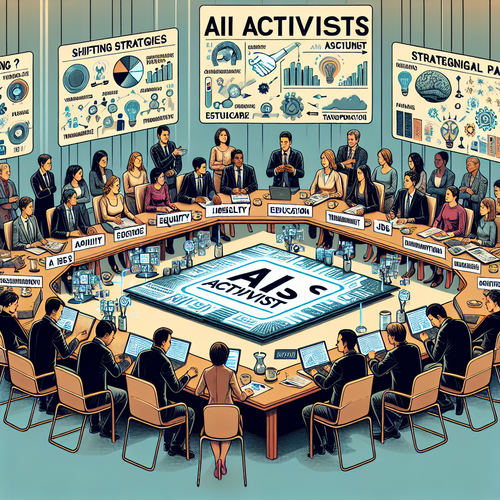
随着人工智能技术的飞速发展与产业格局的不断演变,长期致力于推动AI朝着更公平、更道德方向发展的人工智能活动家们正面临新的挑战,并开始重新审视他们的策略。过去,关于AI的讨论往往局限于技术圈层,充斥着复杂的术语和遥远的未来设想,这使得公众难以真正理解和参与。
As artificial intelligence technology rapidly advances and the industry landscape continuously evolves, AI activists who have long been dedicated to steering AI towards a more equitable and ethical path are facing new challenges and beginning to re-evaluate their strategies. In the past, discussions about AI were often confined to tech circles, filled with complex jargon and distant future scenarios, making it difficult for the public to truly understand and engage.
这种抽象化的讨论方式,虽然在一定程度上提升了人们对AI潜在风险的认知,但也无形中拉远了AI与普通民众日常生活的距离。许多人认为AI是一个“远在那里的抽象技术”,似乎与他们的切身利益无关。这使得AI活动家在试图动员公众、推动政策改革时,面临着沟通障碍和认同危机。
This abstract mode of discussion, while raising awareness of AI’s potential risks to some extent, has also inadvertently distanced AI from the daily lives of ordinary people. Many perceive AI as an “abstract tech thing over there,” seemingly unrelated to their personal interests. This creates communication barriers and an identity crisis for AI activists trying to mobilize the public and push for policy reforms.
意识到这一问题的重要性,越来越多的AI活动家正在调整策略,将关注点从抽象的技术讨论转向AI对“人们物质生活”的具体影响。这意味着他们不再仅仅讨论算法的偏差或隐私的哲学意义,而是聚焦于AI如何影响就业、如何改变医疗服务、如何塑造教育机会,以及它在交通、金融等领域的实际应用带来的影响。
Recognizing the significance of this issue, a growing number of AI activists are adjusting their strategies, shifting their focus from abstract technical discussions to the concrete impact of AI on “people’s material lives.” This means they are no longer just discussing algorithmic bias or the philosophical implications of privacy, but rather concentrating on how AI affects employment, changes healthcare services, shapes educational opportunities, and the consequences of its practical applications in areas like transportation and finance.
通过这种方式,AI活动家试图让公众看到AI并非遥不可及的概念,而是已经或即将深刻改变他们生活的现实力量。将AI议题与具体的社会问题和个人经历联系起来,能够更容易引起民众的共鸣,激发他们的关注和参与。例如,讨论AI在招聘过程中的歧视性应用,远比讨论一个复杂的模型偏差数学公式更能触动人心。
In this way, AI activists are trying to show the public that AI is not a distant concept but a real force that has already profoundly changed or is about to change their lives. Connecting AI issues with specific social problems and personal experiences can more easily resonate with the public, stimulating their attention and participation. For instance, discussing the discriminatory application of AI in the hiring process is far more moving than discussing a complex mathematical formula for model bias.
总而言之,AI活动家策略的转变反映了对当前形势的深刻洞察。在AI日益融入社会结构的今天,有效的行动需要将高层次的道德和伦理讨论转化为与普通民众息息相关的现实问题。只有当人们切身感受到AI的影响,并认识到自己在塑造其未来中的作用时,关于AI的公正、负责任发展的讨论才能真正落地生根,形成广泛的社会共识和行动力量。
In conclusion, the shift in strategy by AI activists reflects a profound insight into the current situation. As AI becomes increasingly integrated into the social fabric, effective action requires transforming high-level moral and ethical discussions into tangible issues closely related to ordinary people. Only when people personally feel the impact of AI and recognize their role in shaping its future can the discussions about the just and responsible development of AI truly take root, forming broad social consensus and momentum for action.