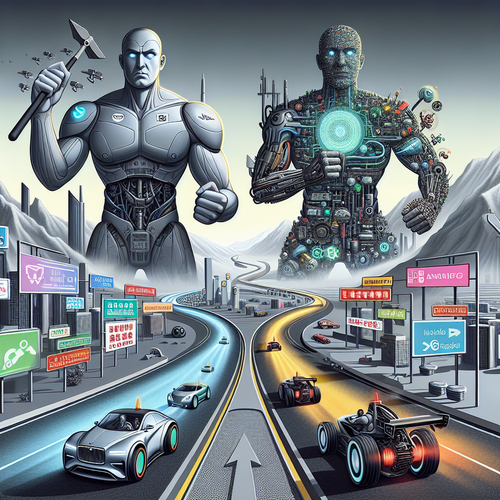
For years, Tesla has been synonymous with the bleeding edge of electric vehicles and autonomous driving technology. Elon Musk’s company captured the world’s imagination, pushing boundaries and setting benchmarks. However, the global automotive and tech landscape is perpetually shifting, and a formidable challenge is now rising from the East, specifically from China, threatening to redefine the future of self-driving cars.
The competitive energy emanating from China’s auto and tech sectors is undeniable. Companies like BYD have already proven their capability to outmaneuver established players in the race for affordable, mass-market electric vehicles, achieving impressive sales volumes. This success is not confined to manufacturing efficiency; it reflects a deep understanding of the local market and a rapid pace of innovation that is now extending into the complex domain of autonomous driving technology.
The threat to Tesla’s self-driving ambitions from these Chinese giants stems from several factors. They are leveraging vast resources, integrating cutting-edge AI and software development capabilities often honed in other tech sectors. Furthermore, their close proximity to and understanding of the enormous Chinese market, a critical battleground for EV and autonomous tech adoption, provides a significant advantage in data collection, testing, and rapid iteration specific to local conditions and consumer behavior.
In response, Tesla has been making strategic moves, including offering free trials of its self-driving features in China. While intended to boost adoption and gather crucial data, such initiatives also spark important conversations about safety and the potential for unforeseen challenges, especially in a complex and rapidly evolving traffic environment. The implications of widespread public testing are a subject of ongoing debate and observation.
Ultimately, the rise of Chinese auto and tech giants in the self-driving arena marks a pivotal moment in the global technology race. It signals a shift from a landscape potentially dominated by a single pioneer to one characterized by intense, multi-polar competition. This rivalry promises to accelerate innovation, potentially leading to faster advancements in autonomous driving technology, while also raising critical questions about regulation, data privacy, and safety standards on a global scale.
多年来,特斯拉一直是电动汽车和自动驾驶尖端技术的代名词。埃隆·马斯克的公司抓住了全世界的想象力,不断突破界限并树立行业标杆。然而,全球汽车和科技格局正在持续变化,一个强大的挑战正从东方崛起,尤其来自中国,这可能重新定义自动驾驶汽车的未来。
中国汽车和科技行业所散发出的竞争活力是不可否认的。像比亚迪这样的公司已经证明了它们在经济适用型大众市场电动汽车竞争中超越老牌参与者的能力,实现了令人瞩目的销量。这种成功不仅限于制造效率;它反映了对本地市场的深刻理解以及快速的创新步伐,这种创新目前正延伸到复杂的自动驾驶技术领域。
中国巨头对特斯拉自动驾驶雄心构成的威胁源于多个因素。它们正在利用庞大的资源,整合通常在其他科技领域磨练出的尖端人工智能和软件开发能力。此外,它们紧邻并了解巨大的中国市场——这是电动汽车和自动驾驶技术应用的 critical battleground——这在数据收集、测试以及针对本地条件和消费者行为的快速迭代方面提供了显著优势。
作为回应,特斯拉一直在采取战略举措,包括在中国提供其自动驾驶功能的免费试用。虽然旨在促进应用和收集关键数据,但此类举措也引发了关于安全和潜在不可预见挑战的重要讨论,尤其是在一个复杂且快速发展的交通环境中。大规模公众测试的影响是一个持续辩论和观察的主题。
最终,中国汽车和科技巨头在自动驾驶领域的崛起标志着全球技术竞赛中的一个关键时刻。它预示着格局正从可能由单一先驱主导转向以激烈、多极竞争为特征。这种竞争有望加速创新,可能导致自动驾驶技术更快进步,同时也引发了关于全球范围内的监管、数据隐私和安全标准的关键问题。