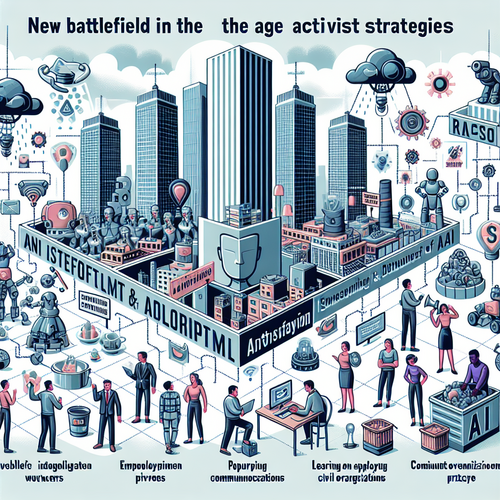
在人工智能以前所未有的速度飞速发展的今天,那些致力于推动AI朝着更公平、更道德方向发展的行动者们,正面临着一场深刻的策略转型。曾经的胜利,比如促使科技巨头修订内部伦理准则,如今看来已不足以应对巨头们在商业利益驱动下的快速迭代与扩张。这不仅仅是一场技术辩论,更是一场关于权力再分配的较量。
As Artificial Intelligence continues its rapid, unprecedented evolution, those dedicated to steering AI towards more equitable and ethical paths are confronting a profound shift in strategy. Past victories, such as influencing tech giants to revise internal ethical guidelines, now appear insufficient against the backdrop of rapid iteration and expansion driven by corporate interests. This is not merely a technical debate; it is fundamentally a struggle over the redistribution of power.
近期,一份来自AI Now研究所的报告深刻揭示了当前AI领域的现状:权力正日益集中于少数几家主导企业手中,它们不仅掌控着技术发展,更巧妙地塑造着关于AI的公共叙事。面对这种由上而下的权力结构,传统的仅依赖于政府政策或企业内部倡议的策略显得力不从心。行动者们意识到,必须寻求新的途径来构建更广泛、更基础的力量。
Recently, a report from the AI Now Institute shed light on the current state of the AI landscape: power is increasingly concentrated in the hands of a few dominant companies. These entities not only control technological advancement but also skillfully shape the public narrative surrounding AI. Faced with this top-down power structure, traditional strategies relying solely on government policy or internal corporate initiatives appear inadequate. Activists realize they must seek new avenues to build broader, more foundational power.
这种策略的重心正在转向基层力量的构建,以及将抽象的AI议题与普通民众的物质生活紧密联系起来。与其将AI描绘成一个遥远的、深不可测的技术概念,不如聚焦它如何在就业、隐私、公平待遇等具体层面影响每个人的日常。只有当人们真切感受到AI对其切身利益的影响时,自下而上的变革力量才能真正汇聚和生长。
The focus of this strategic shift is moving towards building power from the ground up and closely linking abstract AI issues to the material lives of ordinary people. Rather than portraying AI as a distant, inscrutable technical concept, the effort is to focus on how it impacts everyone’s daily life in tangible ways, such as employment, privacy, and fair treatment. Only when people truly feel the impact of AI on their immediate interests can bottom-up forces for change genuinely converge and grow.
这意味着AI行动主义不再仅仅是技术专家和政策制定者的专属领域。它需要更广泛的社会参与,包括工人、社区组织、公民社会团体等多元角色的介入。通过揭示AI与更广泛的经济不平等、社会结构性问题之间的关联,行动者们希望激发更广泛的公众共鸣和行动意愿,从而挑战现有权力格局,推动真正以人为本的AI发展。
This signifies that AI activism is no longer solely the domain of technical experts and policymakers. It requires broader societal participation, involving diverse roles including workers, community organizations, and civil society groups. By revealing the connections between AI and broader economic inequalities and structural societal issues, activists hope to stimulate wider public resonance and willingness to act, thereby challenging the existing power dynamics and pushing for truly human-centric AI development.
最终,AI领域的变革不会一蹴而就,它是一场持久的马拉松。AI行动者的策略调整,从依赖政策到赋能基层,从抽象探讨到关注个体物质生活,标志着这场运动进入了一个更加成熟和务实的阶段。未来的挑战依然巨大,但这种根植于大众、关注实际影响的新策略,或许正是平衡技术发展与社会福祉的关键所在。
Ultimately, transformation in the AI field will not happen overnight; it is a long-distance marathon. The strategic adjustment by AI activists, shifting from reliance on policy to empowering the grassroots, and from abstract discussion to focusing on individual material lives, marks this movement entering a more mature and pragmatic phase. The future challenges remain immense, but this new strategy, rooted in the public and focused on tangible impacts, may well be the key to balancing technological advancement with societal well-being.
发表回复