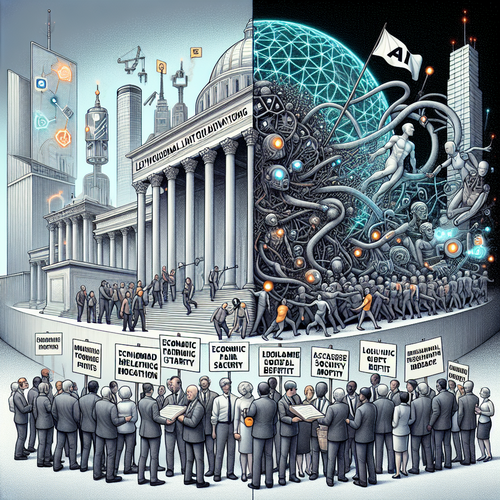
随着人工智能技术以前所未有的速度发展,其力量正日益集中在少数科技巨头手中。这种权力的集中不仅塑造了技术的未来走向,也深刻影响着社会经济结构。面对这一日益固化的格局,AI领域的活动家们正在重新审视他们的策略,寻求更有效的方式来应对挑战。
As artificial intelligence technology advances at an unprecedented pace, its power is increasingly consolidating in the hands of a few tech giants. This concentration of power not only shapes the future direction of technology but also profoundly impacts socio-economic structures. Faced with this increasingly entrenched landscape, activists in the AI field are re-evaluating their strategies, seeking more effective ways to tackle the challenges.
过去,许多AI倡导团体将重心放在影响政府政策上,试图通过立法和监管来约束AI的发展。然而,新的分析表明,这种自上而下的方式可能不足以抵消巨头们日益增长的影响力。因此,策略正在向更基础、更贴近民众生活方向转变,核心在于将AI的讨论与广大民众切身相关的经济困境联系起来,例如就业安全、收入差距以及未来的工作模式。
In the past, many AI advocacy groups focused primarily on influencing government policy, attempting to constrain AI development through legislation and regulation. However, new analyses suggest that this top-down approach may be insufficient to counteract the growing influence of the giants. Consequently, strategies are shifting towards a more grassroots approach, closer to people’s lives. The core idea is to connect the discussion of AI with the economic struggles directly relevant to the broader public, such as job security, income disparity, and the future of work models.
这意味着活动不再仅仅是技术专家或政策制定者之间的抽象对话,而是要深入社区,让普通人认识到AI并非遥不可及的“技术物”,而是正在实实在在影响他们生计和未来的力量。通过揭示AI发展与更广泛的经济不平等之间的关联,活动家们希望能够从基层建立起更强大的社会力量,从而更有力地推动变革。
This signifies that activism is no longer just an abstract dialogue among tech experts or policymakers; it must delve into communities, helping ordinary people recognize that AI is not some distant “tech thing” but a force genuinely impacting their livelihoods and future. By exposing the link between AI development and broader economic inequality, activists hope to build stronger social power from the ground up, thereby driving change more effectively.
这种策略转变的另一个关键在于,焦点不再仅仅是评判某项具体的AI技术(比如一个聊天机器人)是“好”是“坏”,而是直接挑战那些拥有不成文权力的公司本身。即便某些AI产品可能带来创新或便利,但这与其开发者掌握着不受约束的权力,可能对社会产生系统性影响的事实并不矛盾。重要的是要问:这种权力结构对社会整体而言是否有利?
Another key aspect of this strategic shift is that the focus is no longer solely on judging whether a specific AI technology (like a chatbot) is “good” or “bad.” Instead, it directly challenges the companies that possess unaccountable power. Even if certain AI products might bring innovation or convenience, this does not contradict the fact that their developers hold unchecked power that could have systemic impacts on society. The crucial question is: Is this power structure beneficial for society as a whole?
总而言之,AI活动的未来方向正变得更加务实和以人为本。通过将技术议题与经济公平和民众的物质生活紧密结合,并着眼于挑战集中的企业权力而非孤立的技术产品,活动家们正试图开辟一条新的道路。这条道路承认了AI的巨大影响,并寻求确保这种影响能够惠及更广泛的人群,而不是加剧现有的不平等。
In summary, the future direction of AI activism is becoming more pragmatic and people-centric. By closely linking technological issues with economic fairness and people’s material lives, and by focusing on challenging concentrated corporate power rather than isolated technological products, activists are attempting to forge a new path. This path acknowledges the immense impact of AI and seeks to ensure that this impact benefits a broader population, rather than exacerbating existing inequalities.
发表回复