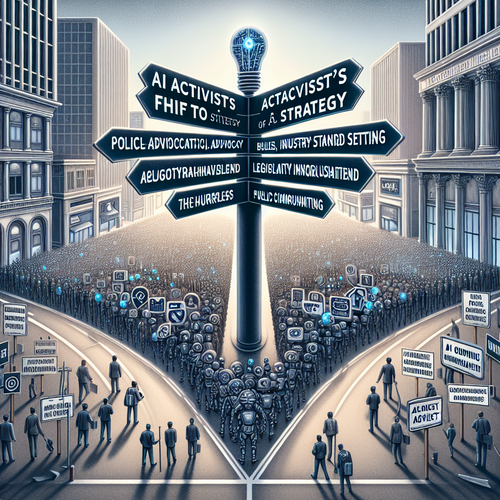
随着人工智能技术以前所未有的速度渗透到社会各个角落,早期关注AI伦理和影响的行动者们正站在一个新的十字路口。他们最初的努力在提高公众意识方面取得了显著成效,但在面对一个日益庞大且快速变化、由巨头企业主导的产业时,原有的策略可能需要重新审视和调整。
As artificial intelligence technology permeates every corner of society at an unprecedented pace, activists who initially focused on AI ethics and impact are standing at a new crossroads. Their initial efforts have been significantly successful in raising public awareness, but when facing an increasingly large and rapidly changing industry dominated by giant corporations, the original strategies may need to be re-examined and adjusted.
这种策略转变并非一时兴起,而是对现实的回应。AI的应用已从实验室阶段进入大规模商业化,随之而来的是更复杂的社会、经济和政治挑战。算法偏见、就业冲击、隐私侵犯以及权力过度集中等问题,要求行动者们发展出更具针对性和系统性的干预方法,不能仅仅停留在理论探讨或零星的抗议上。
This strategic shift is not a whim but a response to reality. The application of AI has moved from the laboratory stage to large-scale commercialization, bringing with it more complex social, economic, and political challenges. Issues such as algorithmic bias, employment disruption, privacy infringement, and excessive concentration of power require activists to develop more targeted and systemic intervention methods, going beyond mere theoretical discussion or sporadic protests.
未来,我们可能会看到AI行动者们将更多精力放在政策倡导、行业标准制定、以及直接参与技术设计和审查过程中。他们可能会与立法者紧密合作,推动更严格的监管框架;也可能寻求技术专家的支持,从内部影响AI系统的开发流程。与受AI影响最直接的社区建立联盟,共同发声,也将成为重要的策略方向。
In the future, we may see AI activists focusing more on policy advocacy, industry standard setting, and direct participation in the technical design and review processes. They may work closely with legislators to push for stricter regulatory frameworks; they may also seek support from technical experts to influence the development process of AI systems from within. Building alliances with communities most directly affected by AI to amplify voices will also become an important strategic direction.
然而,这条道路充满挑战。AI产业的复杂性和快速迭代使得外部监督异常困难。大型科技公司的资源和影响力也远超普通行动组织。此外,公众对AI的理解参差不齐,如何有效沟通风险并动员支持,是摆在行动者面前的另一大难题。
However, this path is full of challenges. The complexity and rapid iteration of the AI industry make external oversight exceptionally difficult. The resources and influence of large technology companies also far exceed those of ordinary activist organizations. Furthermore, public understanding of AI varies, and how to effectively communicate risks and mobilize support is another major challenge facing activists.
总之,AI行动者策略的再思考,标志着一场从启蒙走向深度参与的转型。这不仅是对不断演进的技术环境的适应,更是为了确保人工智能的发展真正服务于人类的共同福祉,而非加剧不公或风险。他们的努力和策略创新,对于塑造负责任的AI未来至关重要。
In conclusion, the rethinking of AI activist strategies marks a transition from enlightenment to deep engagement. This is not only an adaptation to the constantly evolving technological environment but also an effort to ensure that the development of artificial intelligence truly serves the common good of humanity, rather than exacerbating inequality or risk. Their efforts and strategic innovations are crucial for shaping a responsible AI future.
发表回复